
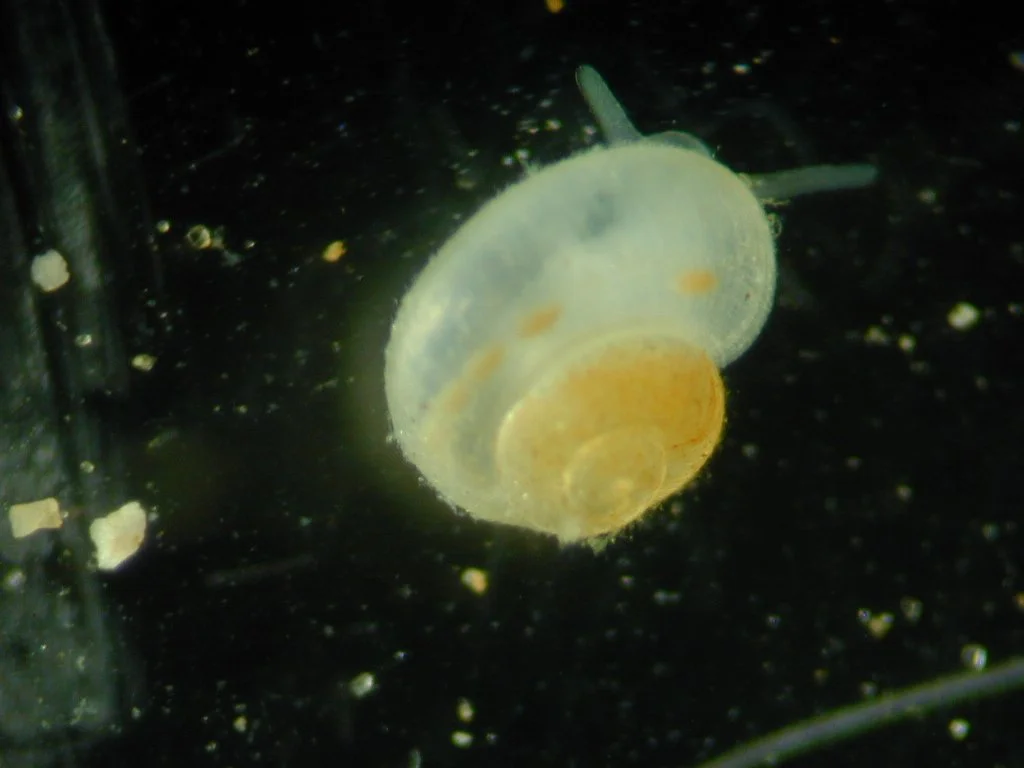
Cavesnail Recovery
Tumbling Creek Cave is the only known habitat for the Tumbling Creek Cavesnail.
An initial reconnaissance survey in 1974 found a population of about 15,000. The current population is estimated at less than 5% of this. Concern over the dramatic decline in the population led to annual snail counts by the late Dr. David Ashley of Missouri Western State University beginning in 1996 and continuing to the present. The sampling results led to the emergency listing of the snail as endangered on December 27, 2001 and final listing as endangered on August 14, 2002. The recovery plan (McKenzie 2003) was signed in September 2003. The dedication of Dr. Ashley to enhancing the understanding of this cavesnail and making the numerous snail counts has been a critically important conservation effort and permitted the listing of this species. His work also facilitated Dr. McKenzie and the cavesnail recovery team in rapidly developing a recovery plan for the cavesnail (McKenzie 2003). Important funding was provided by the U.S. Fish and Wildlife Service.
Video courtesy of Bailey O’Brian.
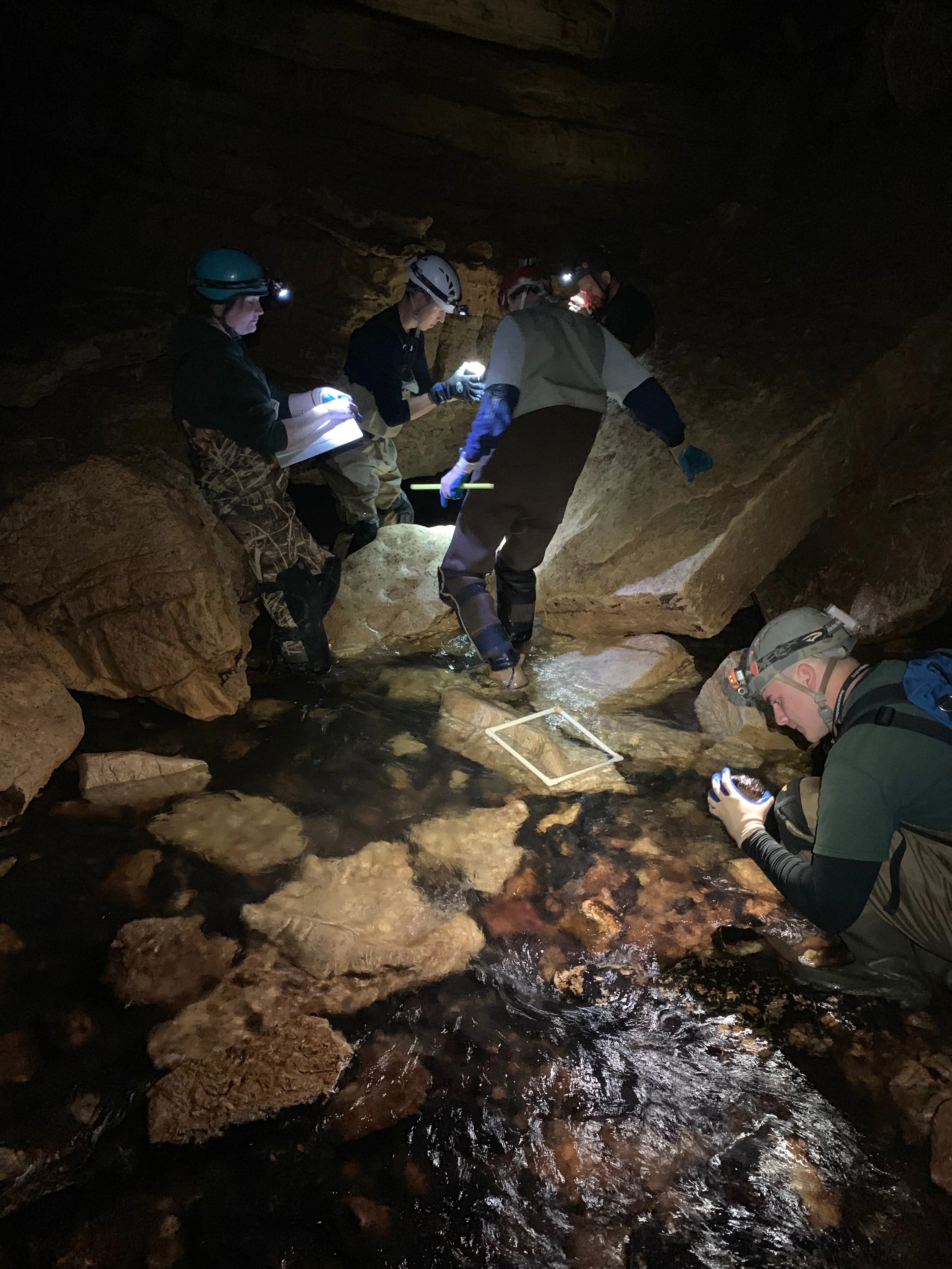
Cavesnail surveys are conducted annually by the U.S. Fish and Wildlife Service, Missouri Department of Conservation, Tumbling Creek Cave Foundation, and staff from the Ozark Underground Laboratory. The most recent surveys estimate cavesnail population sizes between 500-1500 individuals. Additional recovery efforts include graduate level research projects to investigate the distribution of cavesnails throughout Tumbling Creek Cave, crayfish barriers to minimize unnatural predation on the snail, and continued land conservation efforts on the surface to protect the cave’s recharge area.
A water quality monitoring station was installed in August 2002 in the Big Room of the cave as a part of the snail recovery efforts. It records flow rate and water temperature, specific conductance, turbidity, and dissolved oxygen concentrations. Results indicate that turbidity is declining due to conservation programs on lands that contribute water to the cave. Dissolved oxygen concentrations do not appear to pose problems for the snails. Funding for the instrumentation was provided by the U.S. Fish and Wildlife Service.
Preliminary work has been conducted on captive propagation of cavesnails using a surrogate species to refine techniques and identify problems. The water planned for use in this propagation is from a deep well on the cave property. Use of this water will remove the threat that the snails might be harmed or killed by a pollution event that impacted water in the cave stream. An important capability of the captive propagation facility is that it could be used as emergency habitat for cave invertebrates in the event of a highway spill on any of the 5.6 miles of state and federal highways and 3.2 miles of county roads that pass through the cave’s recharge area.