To Buy A Cave
The History of Tumbling Creek Cave and the Ozark Underground Laboratory
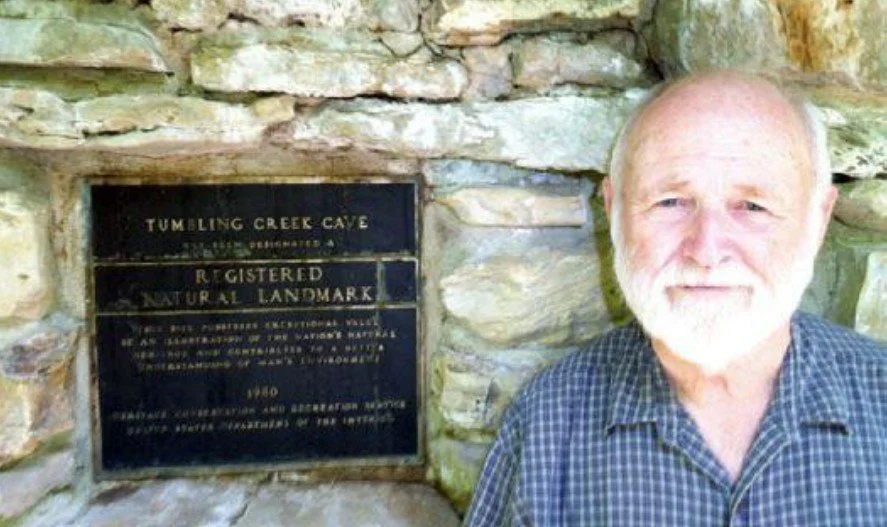
In the spring of 1966, a young hydrologist working as a consultant in southern California purchased a rocky 126-acre ridgetop farm in rural Taney County, Missouri. His name was Tom Aley, and he was not coming to Missouri to become a hardscrabble farmer. Instead, he intended to establish the first cave research laboratory in North America. The property he purchased sat atop a cave known locally as Bear Cave. Because more than 60 caves in Missouri share that name, Tom renamed it Tumbling Creek Cave and moved to Missouri to begin pursuing his vision.
Although Tom named the cave, he did not discover it. Located along Big Creek, a tributary of Bull Shoals Lake, the cave had long been known to locals. Even before the Corps of Engineers dammed the White River in 1951 to create Bull Shoals Lake, people had been visiting the cave for generations. Etchings found deep within the cave date to the 1880s. While there is little direct evidence of Native American use within the cave itself, several stone points, bone tools, and pottery fragments have been discovered near its entrance.
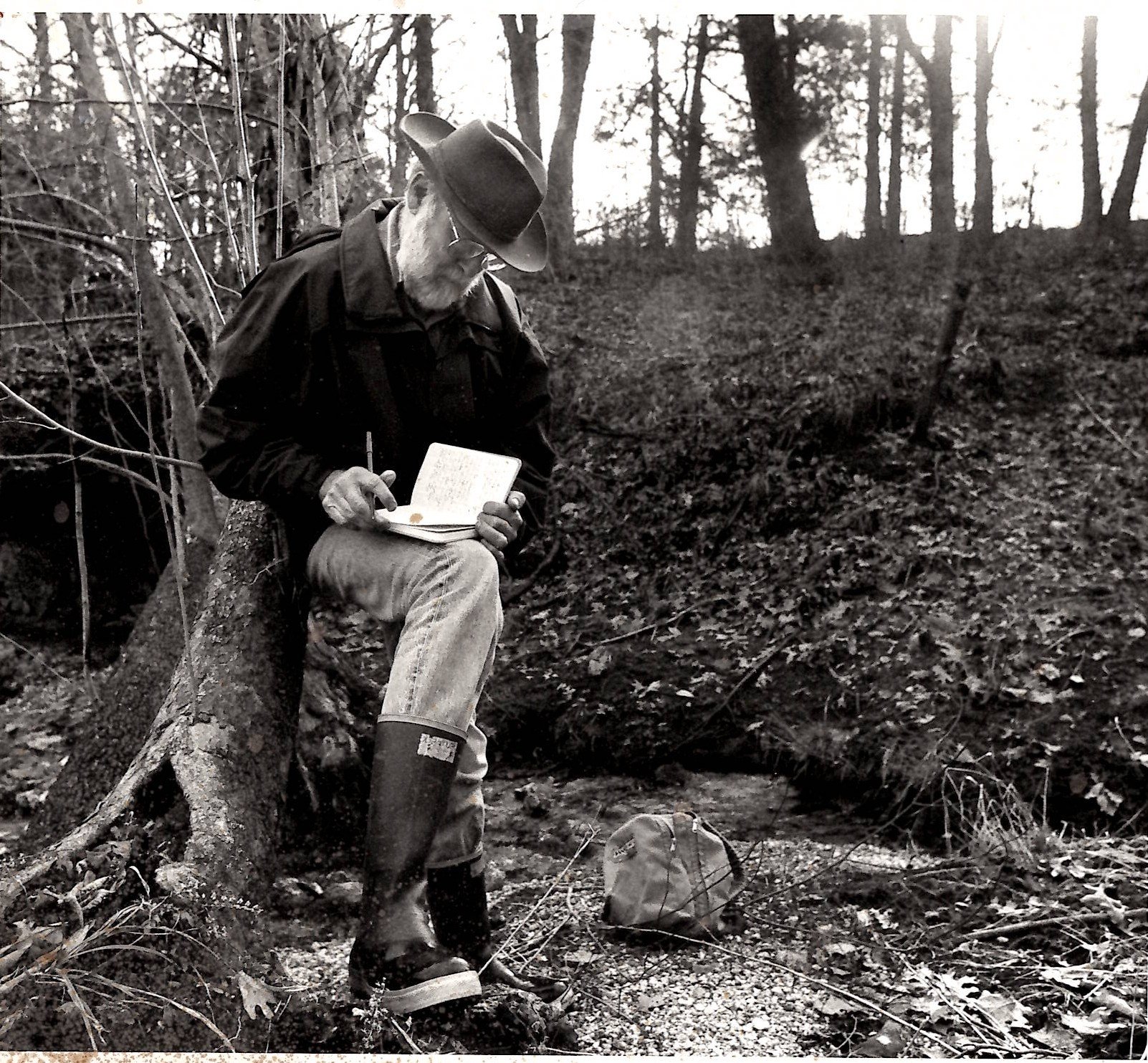
Soon after purchasing the property, Tom found work as a hydrologist with the U.S. Forest Service on the Mark Twain National Forest in Winona, Missouri. During the weekdays he conducted pioneering hydrogeologic studies in the karst landscapes of the Eleven Point River region. On weekends he returned to Taney County to begin developing Tumbling Creek Cave as a site for research and education. In 1973, Tom left the Forest Service when he and his wife, Cathy, began operating the Ozark Underground Laboratory full time. The laboratory functioned as a private consulting and research organization focused on cave and groundwater science, while also offering educational field programs. Over the next fifty years, Tom and Cathy expanded the scope and reputation of the Ozark Underground Laboratory, conducting studies across the United States and on every continent except Antarctica.
While building their professional work, the Aleys were also deeply committed to protecting Tumbling Creek Cave and the land that sustained it. What began as a 126-acre property gradually grew into more than 3,500 acres of conserved land. Most of these acquisitions lie within the recharge area of Tumbling Creek Cave and were purchased specifically to protect the cave’s groundwater. Many of the properties they acquired had been degraded by dumping, overgrazing, and eroding streambanks. Tom and Cathy worked tirelessly to restore these lands, improving water quality and ecological health throughout the recharge area.
In 2004, the Aleys took another important step to secure the cave’s future. Tom and Cathy established the Tumbling Creek Cave Foundation, a public charitable organization dedicated to protecting Tumbling Creek Cave, its rare inhabitants, and the lands that sustain it. The Foundation also supports research and education related to caves, groundwater, and the unique karst landscapes of the Ozarks.
Today, the Tumbling Creek Cave Foundation continues the work the Aleys began decades ago—protecting land, restoring natural communities, safeguarding rare and endangered species, and helping people better understand the hidden world beneath their feet.
Tom shared many entertaining stories about his life’s work in his book Bear Cave Hollow; Stories of Caves and Karst.
Thomas J. Aley
1938 - 2025
In October of 2025, Tom passed away after a two year battle with pancreatic cancer. He approached his fight with humor and dignity. He will be greatly missed, but his legacy lives on in his wife Cathy and the staff at the Tumbling Creek Cave Foundation and Ozark Underground Laboratory.