
Terrestrial Flora and Natural Communities
While known for its subsurface wonders, the lands around Tumbling Creek Cave include a mosaic of landscapes and natural communities. In 2023, a report was authored by botanist Paul Nelson after an extensive two-year study conducted for the Tumbling Creek Cave Foundation to assist in the understanding, planning, and management of the land. Within the report are descriptions of the landscape’s geology, topography, soils, hydrology, climate, and historic vegetation as well as an exhaustive characterization of the property’s flora and natural communities.
An analysis of historical vegetation conducted by Nelson found that the landscape was very open timberland dominated by post and black oaks and interspersed with barrens and glades. Substantial areas of large diameter old-growth post and chinquapin oaks were noted in the study. Witness and line trees from the 1840’s land survey included mainly post, black and white oaks, with some hickory, elm, chinquapin oak and walnut. Nelson found six original witness trees from that survey. At present, the old growth trees range in diameter from 20-25 inches with several estimated to be 275-300 years old.
Nelson’s work described 16 distinct natural communities on lands surrounding Tumbling Creek Cave. The most prevalent upland natural communities include chert woodlands, bottomland woodlands, dolomite glades, and upland flatwoods. Other natural communities include mesic bottomland forests, chert savanna, gravel washes, dolomite springs, and Ozark fens.
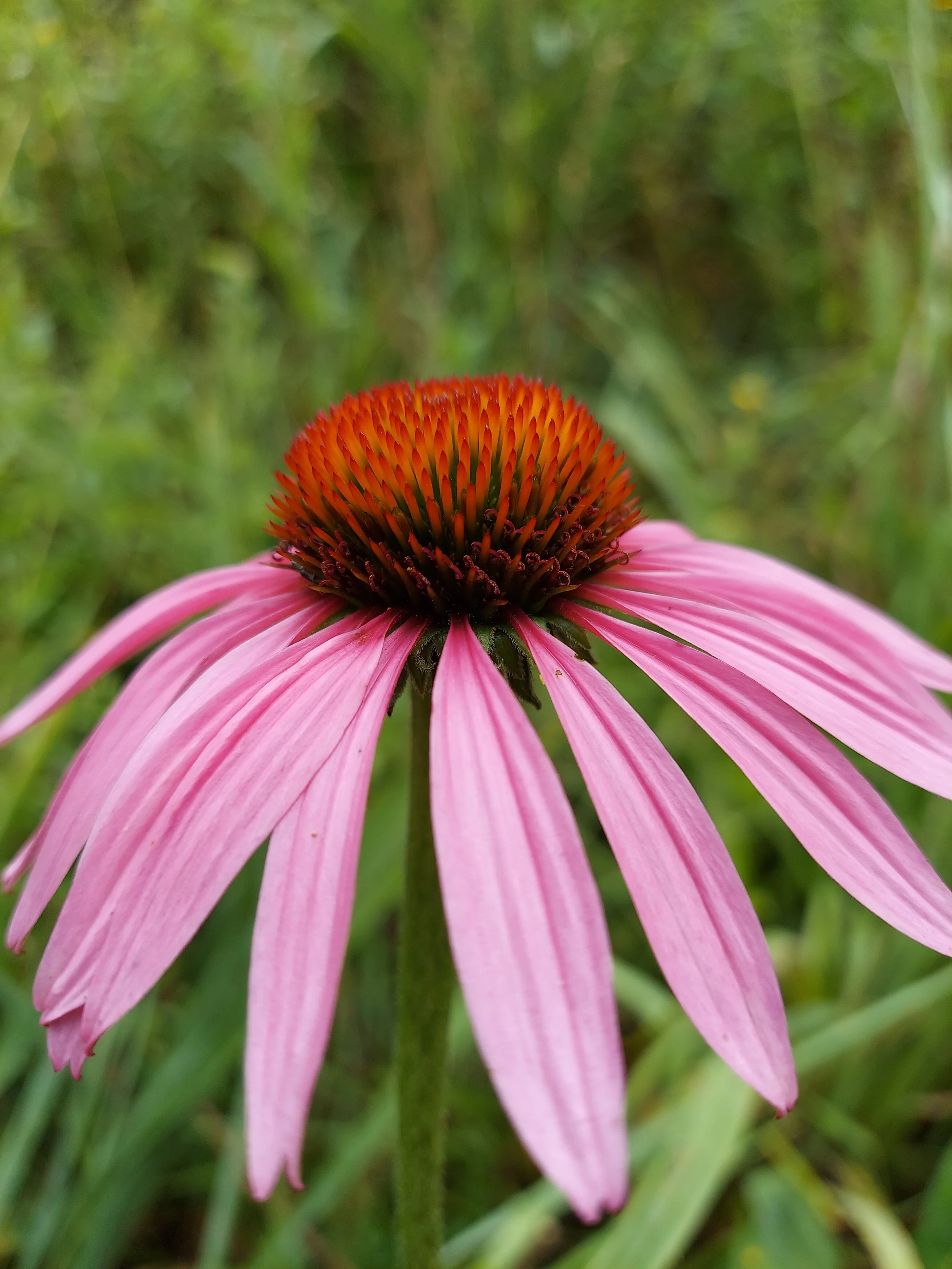
The flora study identified 1,017 unique plant species, which is the highest number of species documented among 25 comprehensive plant studies conducted in Missouri. While much of the floral diversity can be attributed to the variety of natural communities, there were also several invasive species documented. The work Nelson conducted will help inform management decisions to restore natural communities, eradicate invasive plant species, and protect habitat for species of conservation concern.
A digital copy of The Flora and Natural Communities of the Ozark Underground Laboratory and Tumbling Creek Cave National Natural Landmark is available by contacting Dave Woods at woods@ozarkundergroundlab.com.