Rare and Endangered Species
Tumbling Creek Cave is home to a diverse community of cave fauna. To date, 129 species have been documented in the cave, including two endemic and four federally endangered species. Endangered species observed in the cave include the gray bat (Myotis grisescens), Indiana bat (Myotis sodalis), northern long-eared bat (Myotis septentrionalis), and the Tumbling Creek cavesnail (Antrobia culveri). The two endemic species, known only to occur in Tumbling Creek Cave, include the Tumbling Creek cavesnail and Aley’s cave millipede (Chaetaspis aleyorum).
The Tumbling Creek Cavesnail
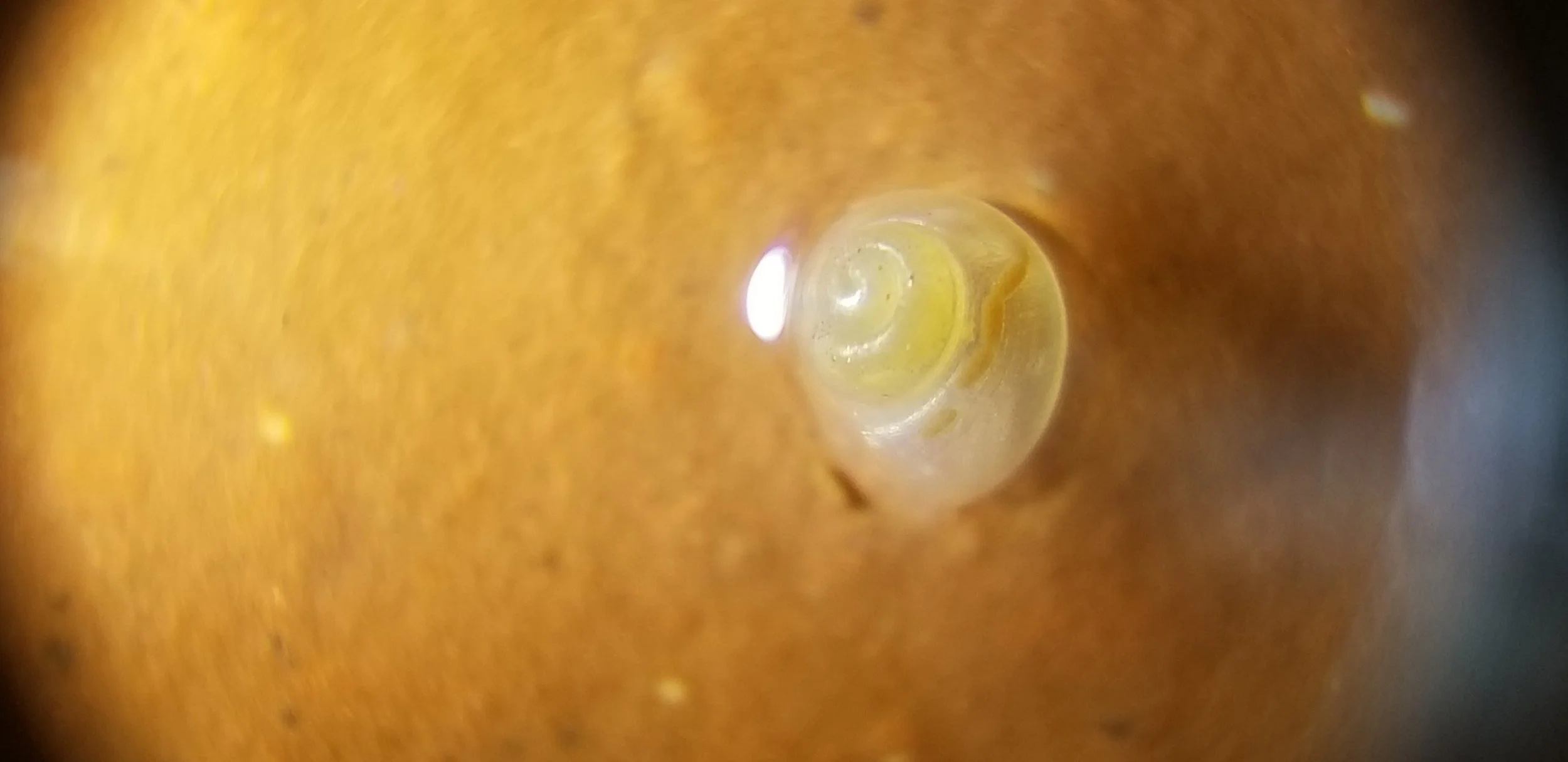
The rarest and most unique species found in Tumbling Creek Cave is the Tumbling Creek cavesnail (Antrobia culveri). First discovered in the cave in the late 1960’s, and later described as a new genus and species by the famous taxonomist Leslie Hubricht in 1971, the cavesnail was a common resident of the rocks in Tumbling Creek. Unfortunately, that would change.
The cavesnail is a small, white, blind, aquatic snail. A large snail may measure 2.3 mm tall and 2.0 mm in diameter, with a small conical shell containing about 3.5 whorls. They area only slightly larger than a very coarse grain of sand. That is SMALL!
In 1974, Robert Greenlee estimated the cavesnail population to be approximately 15,000 individuals. By the early 1990’s however, the population was in sharp decline. Thanks to important survey work conducted by Dr. Paul McKenzie (USFWS) and the late Dr. David Ashley (Missouri Western State University), the cavesnail was listed as an endangered species in 2002. Since that time, recovery efforts have just barely saved the snail from extinction. The most recent surveys estimate approximately 1000 cavesnails in the cave, about 6% of the original population estimates in the 1970’s.
Hundreds of hours have been spent looking for Antrobia in nearby caves and springs, but to no avail. In fact, the entire documented range of the Tumbling Creek cavesnail is confined to tens of meters of Tumbling Creek. Considering its tiny size and limited range, the Tumbling Creek cavensail is likely the smallest species and has the most restricted range of any animal on the U.S. Endangered Species List.
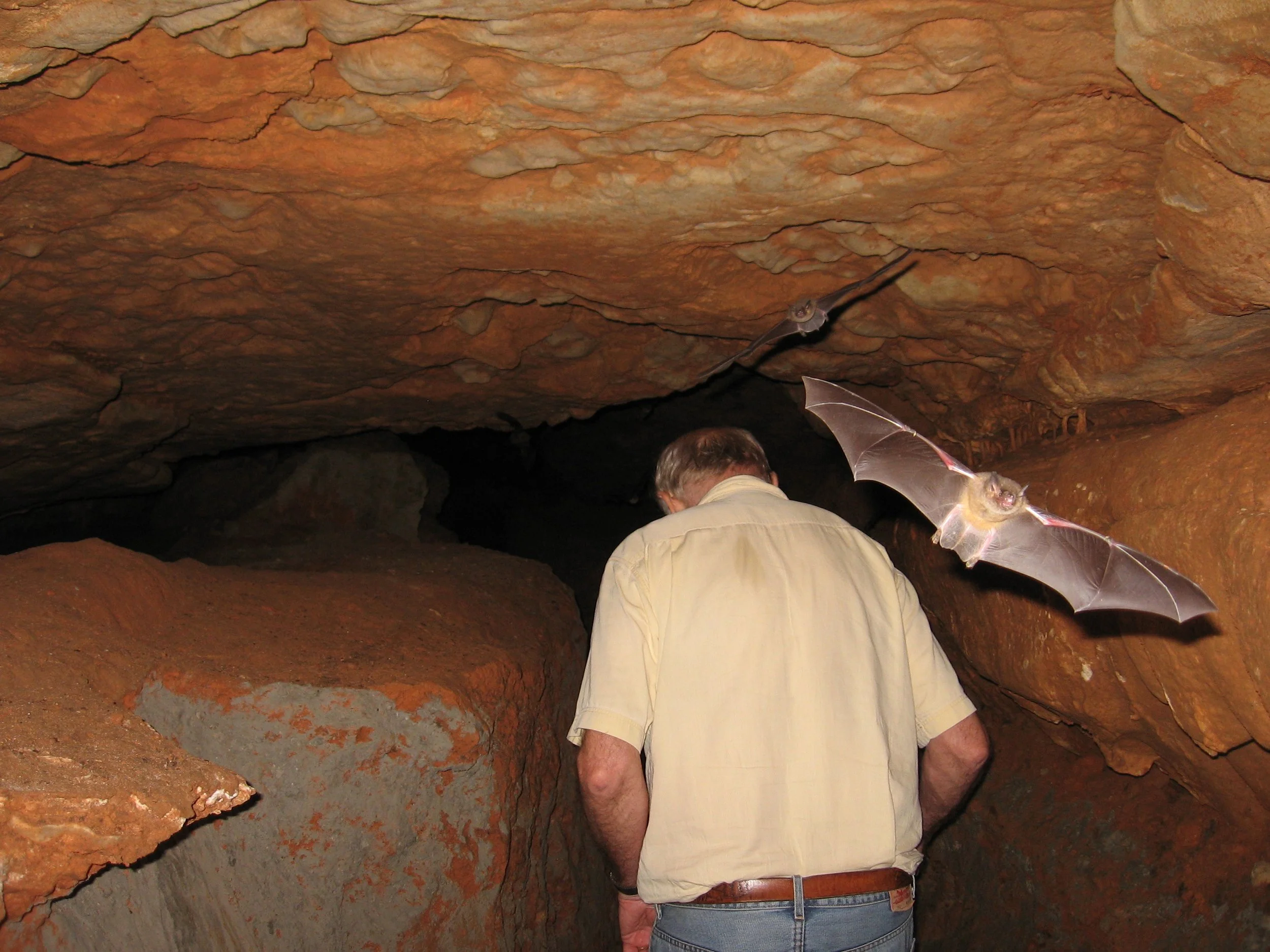
Gray bats greeting Tom Aley in the East Passage. Photo by Rick Devlin
Other Rare and Unique Species in Tumbling Creek Cave
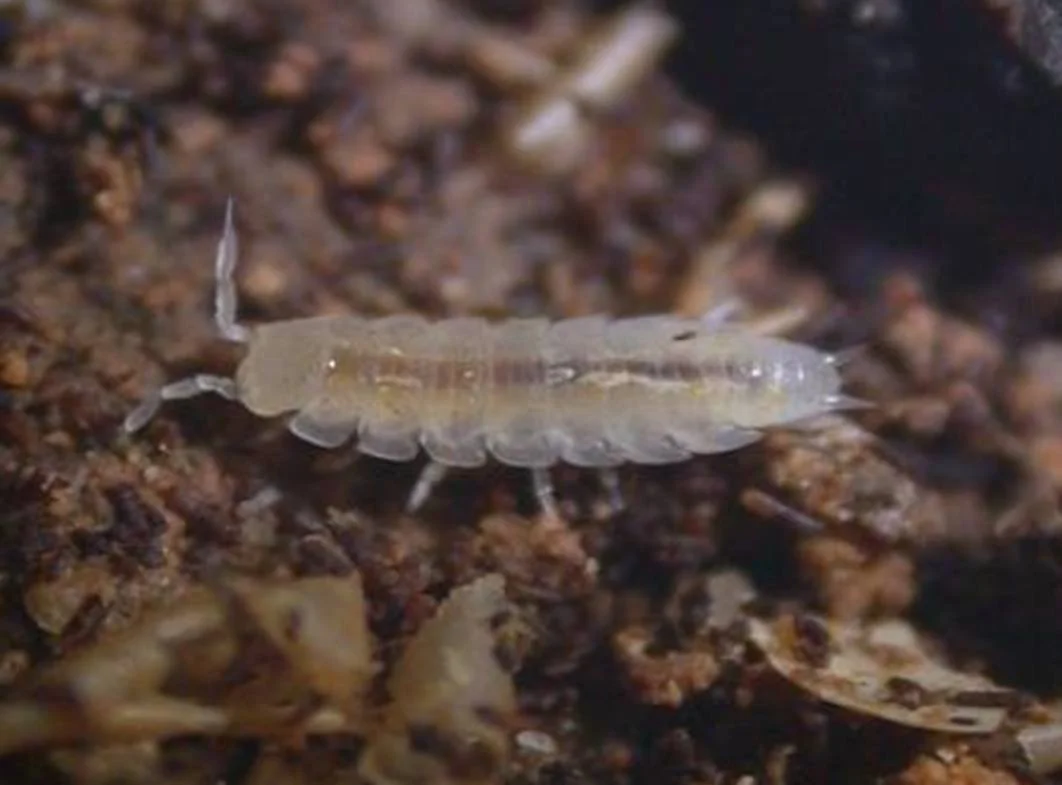
Ashley’s isopod (Brackenridgia ashleyi), named for Dr. Dave Ashley, has been found in other caves in Missouri and Arkansas. Tumbling Creek Cave is the type locality for the species.
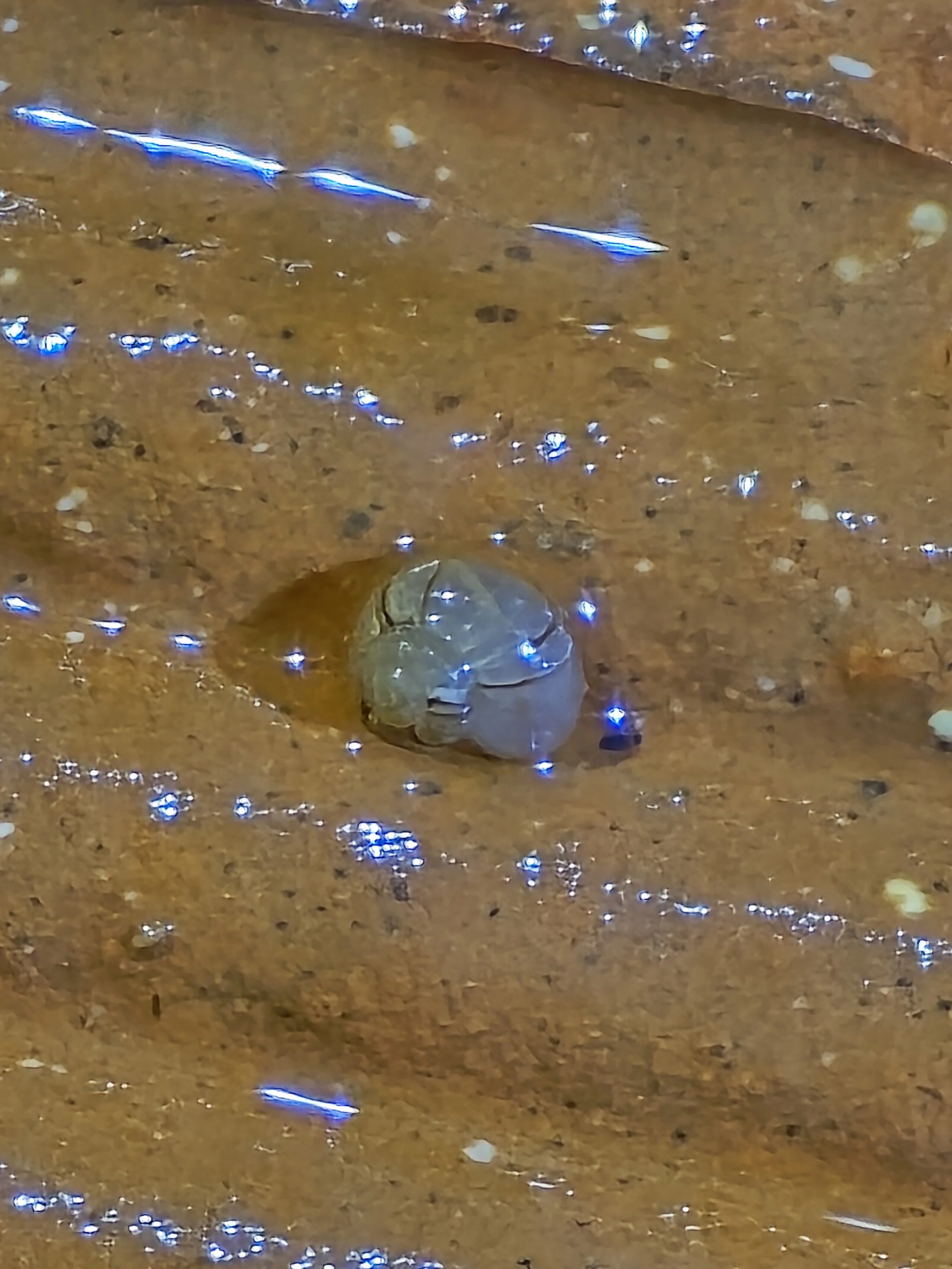
Photo by Bailey O’Brian
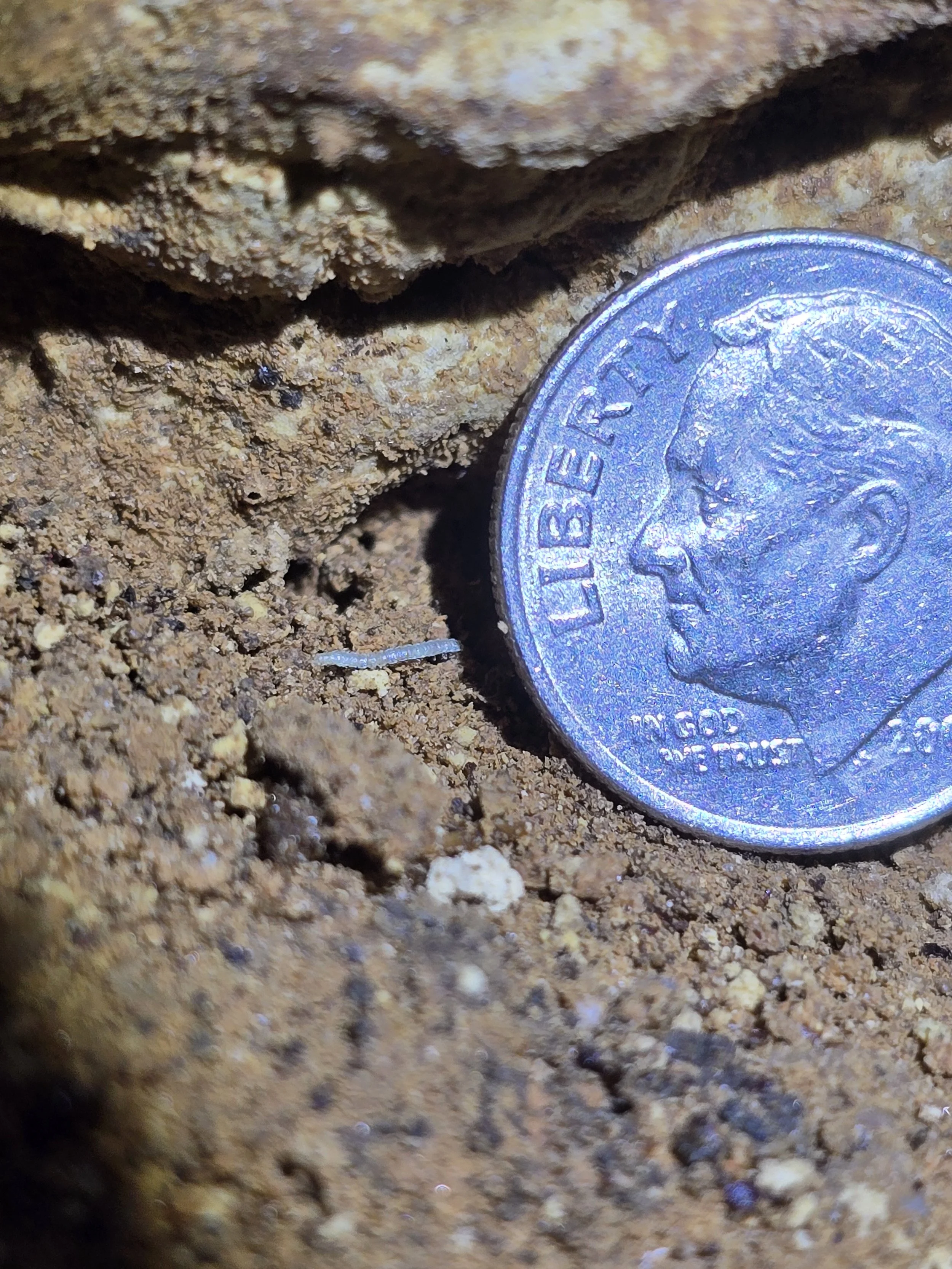
Aley’s cave millipede (Chaetaspis aleyorum), named for Tom and Cathy Aley, has only been observed in Tumbling Creek Cave. Eighty percent of all individuals have been documented on only one mud bank in the cave.
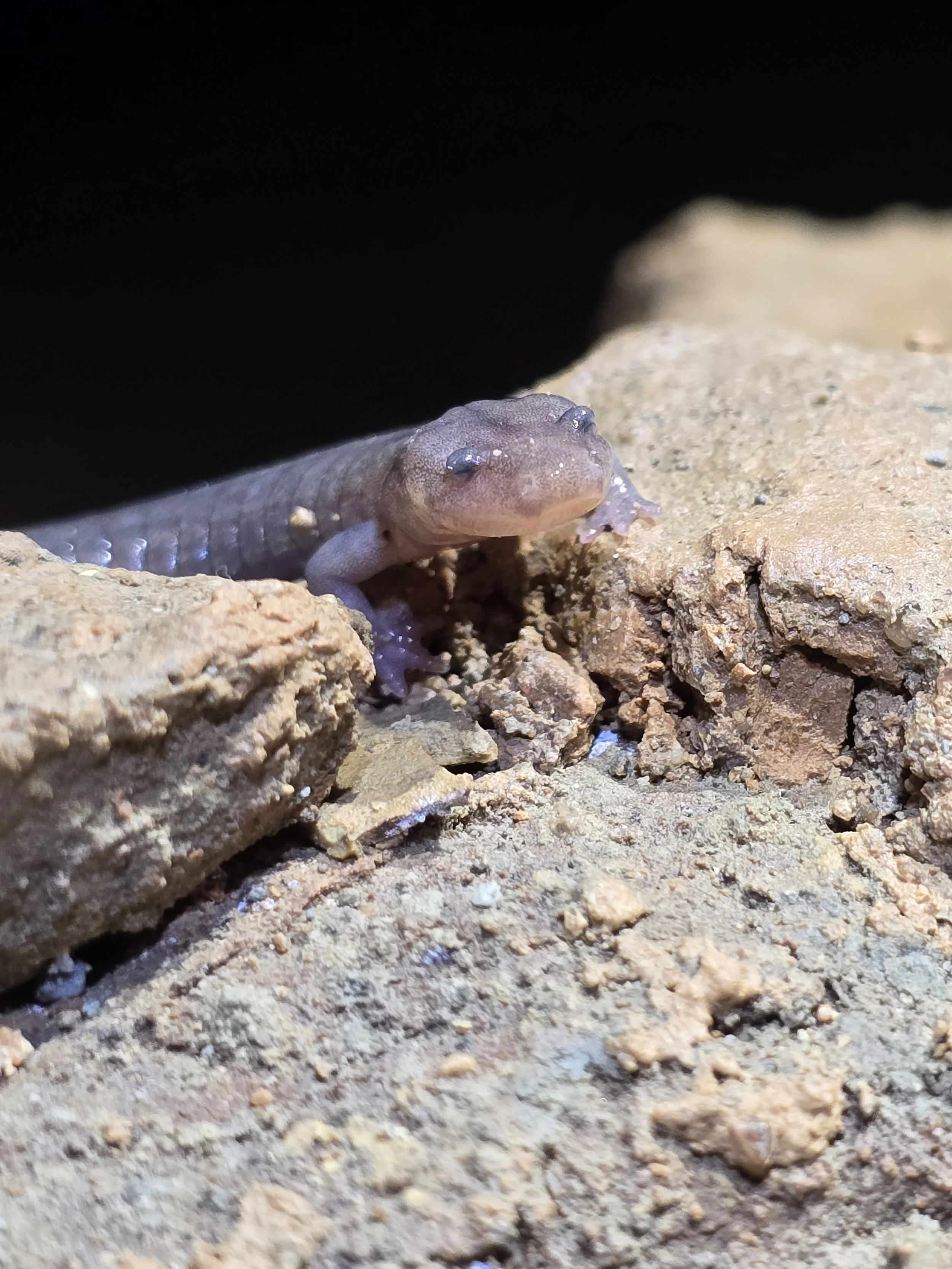
Grotto salamanders (Eurycea spelaea) are endemic to the Ozark Highlands and are Missouri’s only species of blind salamander. They are a Species of Conservation Concern in the state and common in Tumbling Creek Cave.
Bats!
Bats play a crucial role in the energy flow of the Tumbling Creek Cave ecosystem. Eight species of bat have been documented in the cave, but the most abundant is the federally endangered gray bat (Myotis grisescens), which use the cave as a major maternity site. Female gray bats arrive at the cave each summer to birth and rear their young. Researchers with the US Fish and Wildlife Service and University of New Hampshire have documented approximately 30,000-40,000 gray bats using the cave in the summer months. These bats bring vital food energy into the cave system in the form of guano, depositing hundreds of pounds of the black gold each night in the cave.
Gray bats emerging from the Bear Cave entrance of Tumbling Creek Cave at dusk.
Gray bats exiting through the stream passage of Tumbling Creek Cave recorded on a thermal camera.